
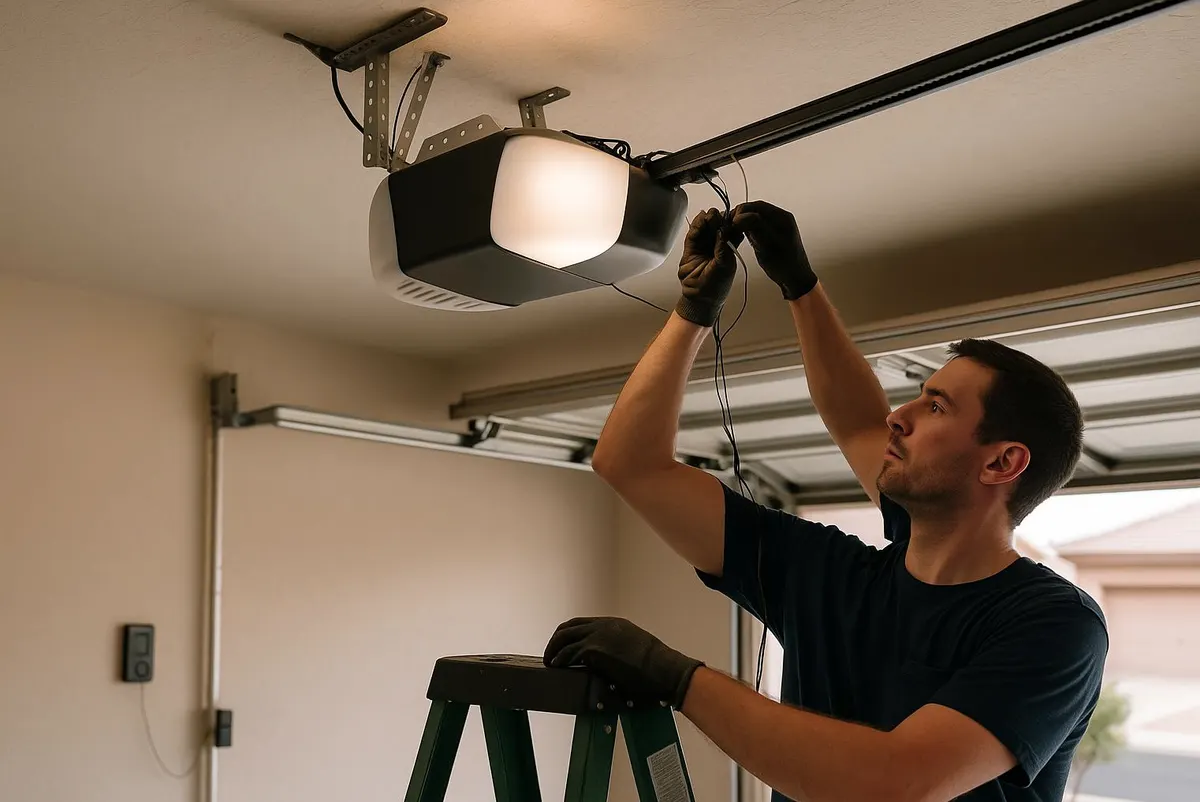
Rule of thumb: if the door looks crooked but still glides, the tracks are likely misaligned; if it grinds, jerks, or stops partway, something is actually bent. The exceptions matter, though — a door can be badly misaligned and still look straight to the eye, and a mildly bent track sometimes runs fine for weeks before it suddenly binds. Track problems rarely announce themselves clearly, which is why it helps to know what to look for and listen for.
Symptoms to Watch For
- The door hesitates or jerks at a specific point in its travel, every time, in the same spot.
- You hear grinding, popping, or metal-on-metal scraping as the door moves.
- One side of the door looks higher or lower than the other when it's open.
- Rollers have visibly popped out of the track, or you can see daylight between the roller and the rail.
- The door reverses on its own or the opener strains and stalls partway through a cycle.
- Visible gaps, wobbles, or waves in the metal track itself when you sight down its length.
Any one of these on its own might be minor. Several together usually mean the track has shifted out of position or taken physical damage.
How a Technician Checks It, Step by Step
1. Visual Alignment Check
The first move is sighting down both vertical tracks and across the horizontal sections, comparing them to the door's actual travel path. Tracks should run perfectly parallel to each other, with a consistent gap matching the door panel. Even a quarter-inch of drift at the top can translate into a door that binds or drops unevenly.
2. Mounting Hardware and Brackets
Loose bolts and brackets are the most common root cause, and they're checked before anything is bent back into shape. In homes near Satsuma, humidity swings and the occasional swelling of wood door jambs can work lag screws loose over time, letting the whole track assembly shift a few millimeters — enough to throw off the roller path. The fix here is simple: re-tighten or replace hardware, and re-shim the bracket if the framing has moved.
3. Roller Condition
Worn, cracked, or flat-spotted rollers put uneven pressure on the track every time the door cycles, which gradually bends the rail even if nothing hit it directly. Nylon rollers are checked for wear grooves; steel rollers are checked for rust pitting, which shows up faster in the salt air closer to the coast. Worn rollers are replaced as a set, not one at a time, since mismatched rollers reintroduce the same uneven load.
4. Impact Damage
Next comes a check for a direct hit — a car bumper, a bike, a riding mower, or the door itself coming off a roller and slamming sideways into the rail. This produces an obvious kink or crease rather than a gentle wave. Minor bends in the horizontal track can sometimes be carefully straightened in place with the right tools. Anything in the vertical track near the bottom rollers, or any crease sharper than a gentle curve, usually means replacing that section rather than risking a repair that fails again under load.
5. Framing and Wall Movement
If the tracks and hardware check out but the misalignment persists, the technician looks at the structure itself — door jambs, header, and the slab the tracks are anchored to. Older garages in this area can see slow settling, and humid-season moisture causes wood framing to swell and then shrink again once drier weather returns. That cycle, repeated over years, can pull brackets slightly out of plumb even when nothing was ever struck. The fix is re-anchoring the track to solid framing, sometimes with new bracket positions rather than the original holes.
6. Opener Force and Limit Settings
Last on the list, because it's often mistaken for a track problem: if the opener's travel limits or force settings are off, the door can appear to bind or reverse even with perfectly straight tracks. This is a quick adjustment, but it's only the answer if the track inspection above comes back clean.
What Causes This in Putnam County Specifically
Beyond everyday wear, a few local factors speed up track problems. Hurricane-season winds put repeated lateral stress on the door and track assembly, which can loosen brackets even on doors rated for wind load. Afternoon downpours followed by hot, humid stretches keep framing members swelling and contracting, and that slow movement is enough to nudge hardware out of alignment over a season or two. Homes closer to the water deal with faster rust on steel rollers and track fasteners, which weakens the hold points before the track itself ever bends.
When to Call Satsuma Garage Door Experts
If your door is sticking, grinding, or visibly crooked, it's worth getting it looked at before a roller pops out entirely and the door comes off its track under load — that's a heavier repair and a safety risk. Satsuma Garage Door Experts handles off track door repair and can realign, re-anchor, or replace damaged sections on the spot, and a garage door maintenance and tune-up visit will catch loose hardware and worn rollers before they turn into a bent track in the first place.
If your garage door in Satsuma, Palatka, or anywhere around Putnam County is sticking or sounding rough, call Satsuma Garage Door Experts for a straightforward inspection and an honest fix.